
High-fidelity robotics simulation.
Accurate contact and friction models.
Advanced joint and actuation models.
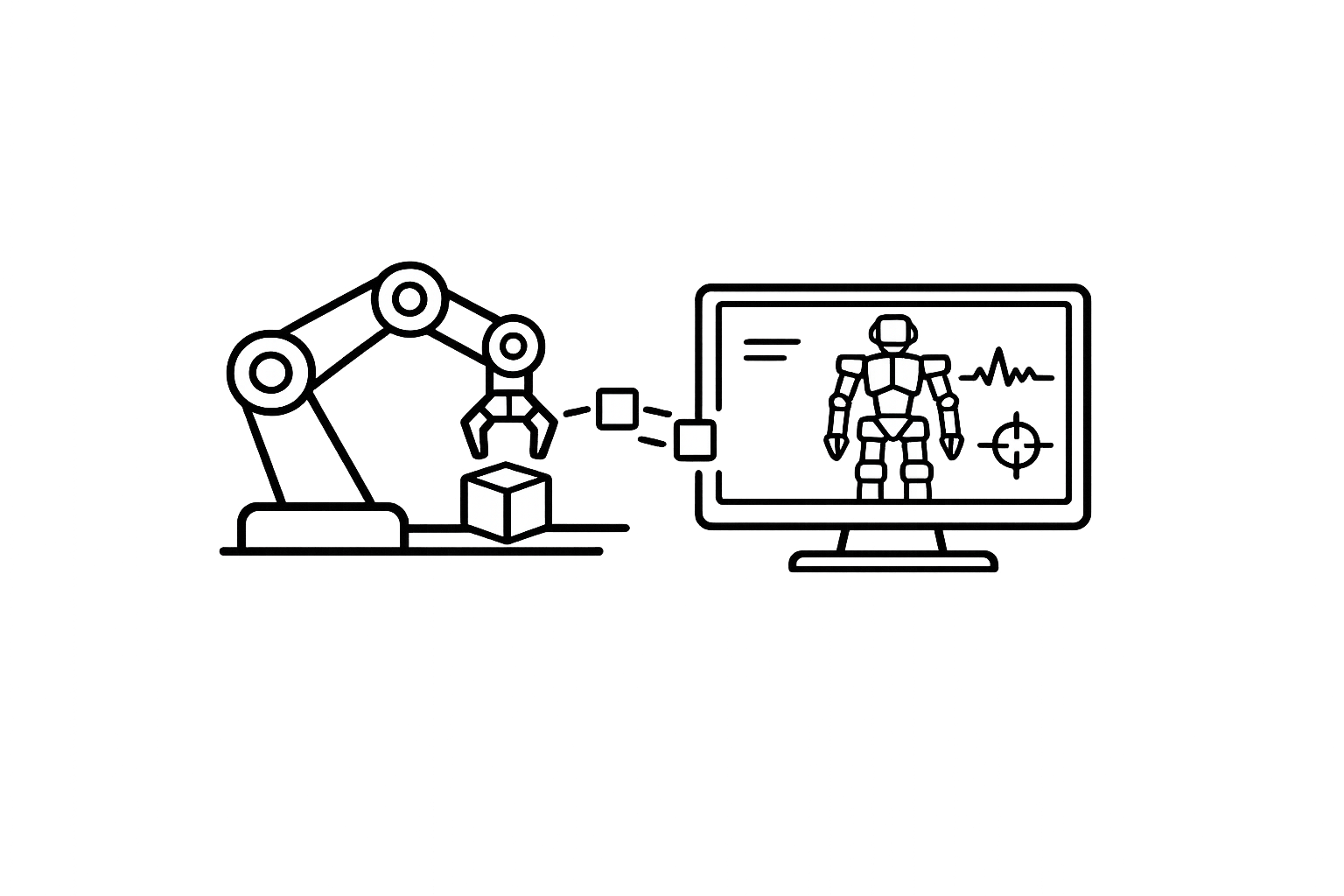
Simulate exact CAD meshes.
Manipulate soft objects.
Simulate soft grippers and tactile sensors.
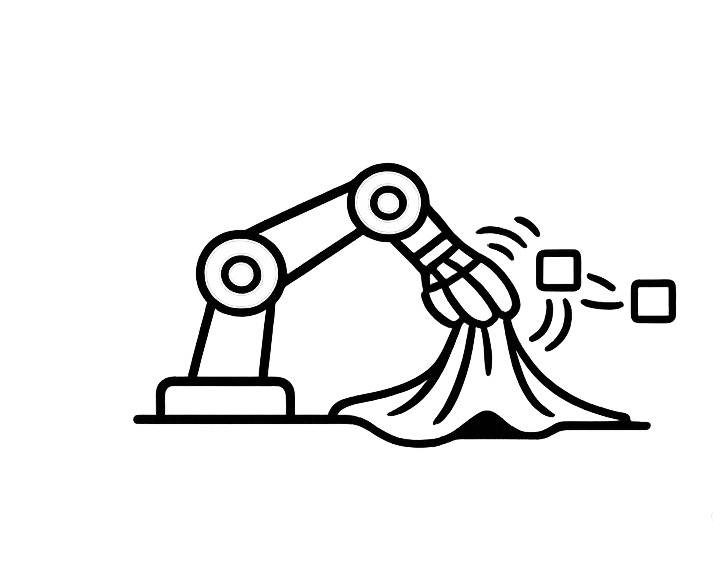
Accurate and stable cloth simulation.
Precise, high-performance cable simulation.
Fluid and granular materials.
Realistic interactions between different simulation models.
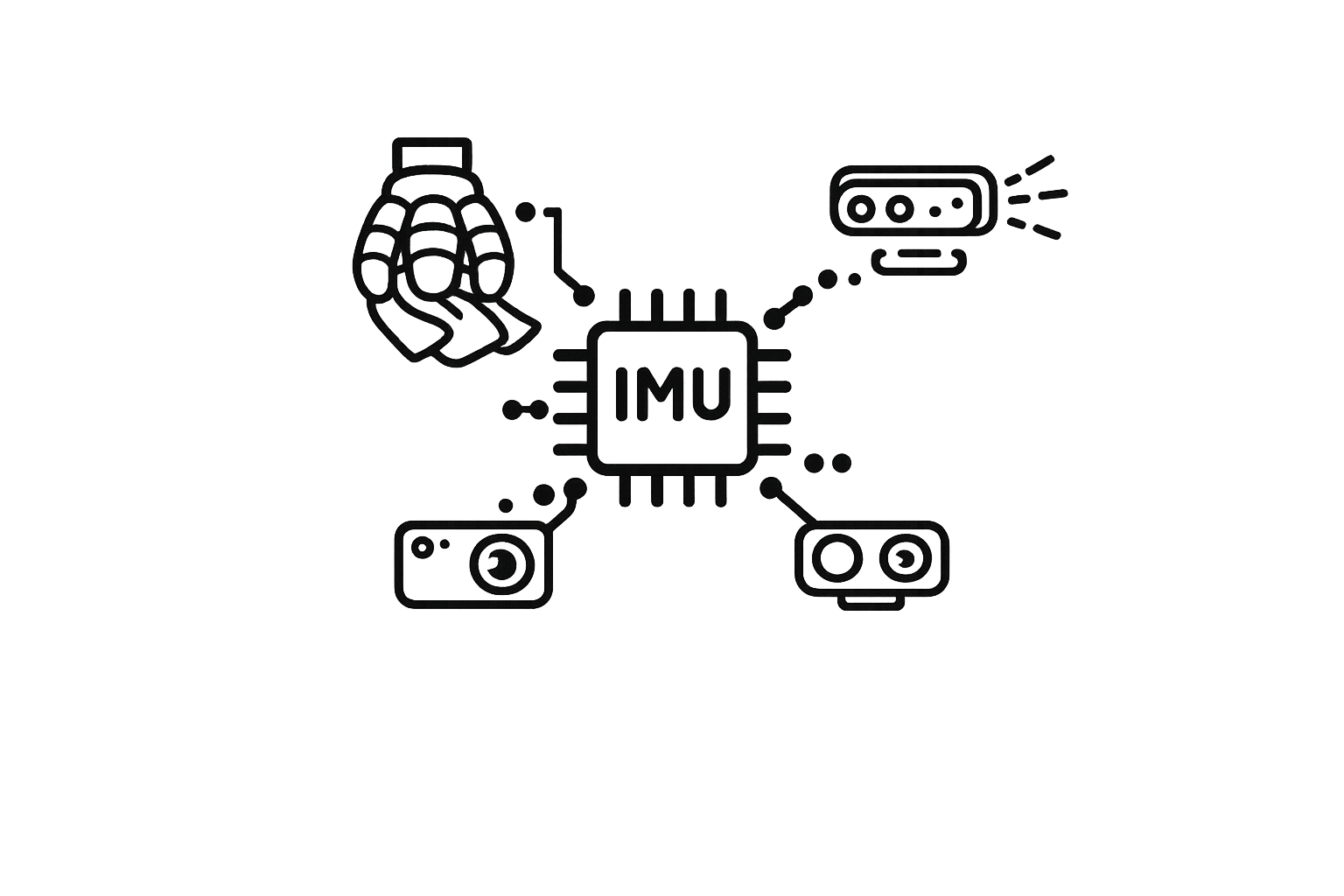
Tactile sensors
IMU
LiDAR
RGB
Depth Cameras
One-click calibrate your simulated models based on real-world data.
Zero-shot trained policies from sim to real.

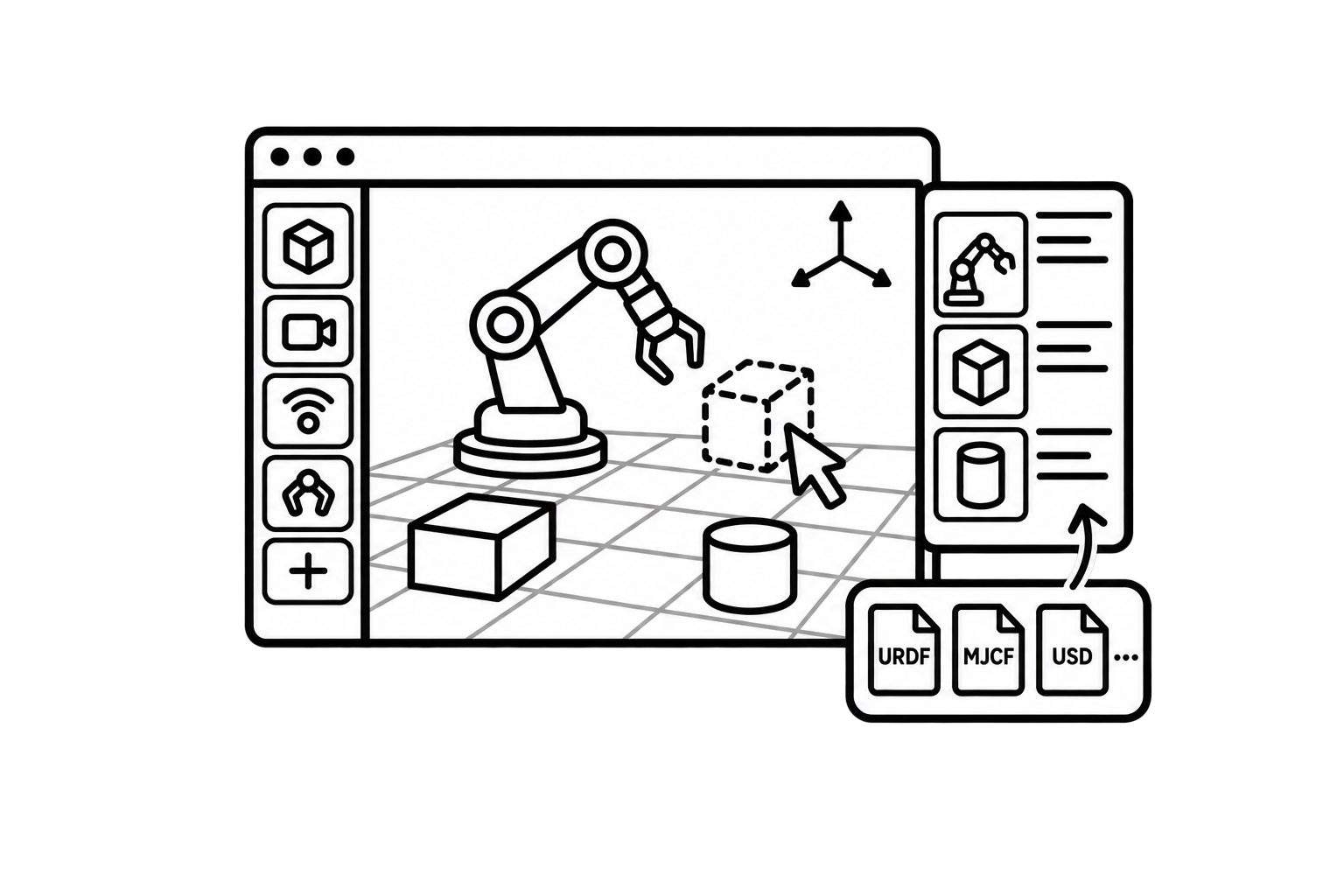
Provides a graphical authoring interface to configure robots and environments, including placement of sensors, attachments etc.
Allows creating new environments that can be loaded in other products.
Supports incorporating existing files using multiple file formats (URDF, MJCF, USD incoming).
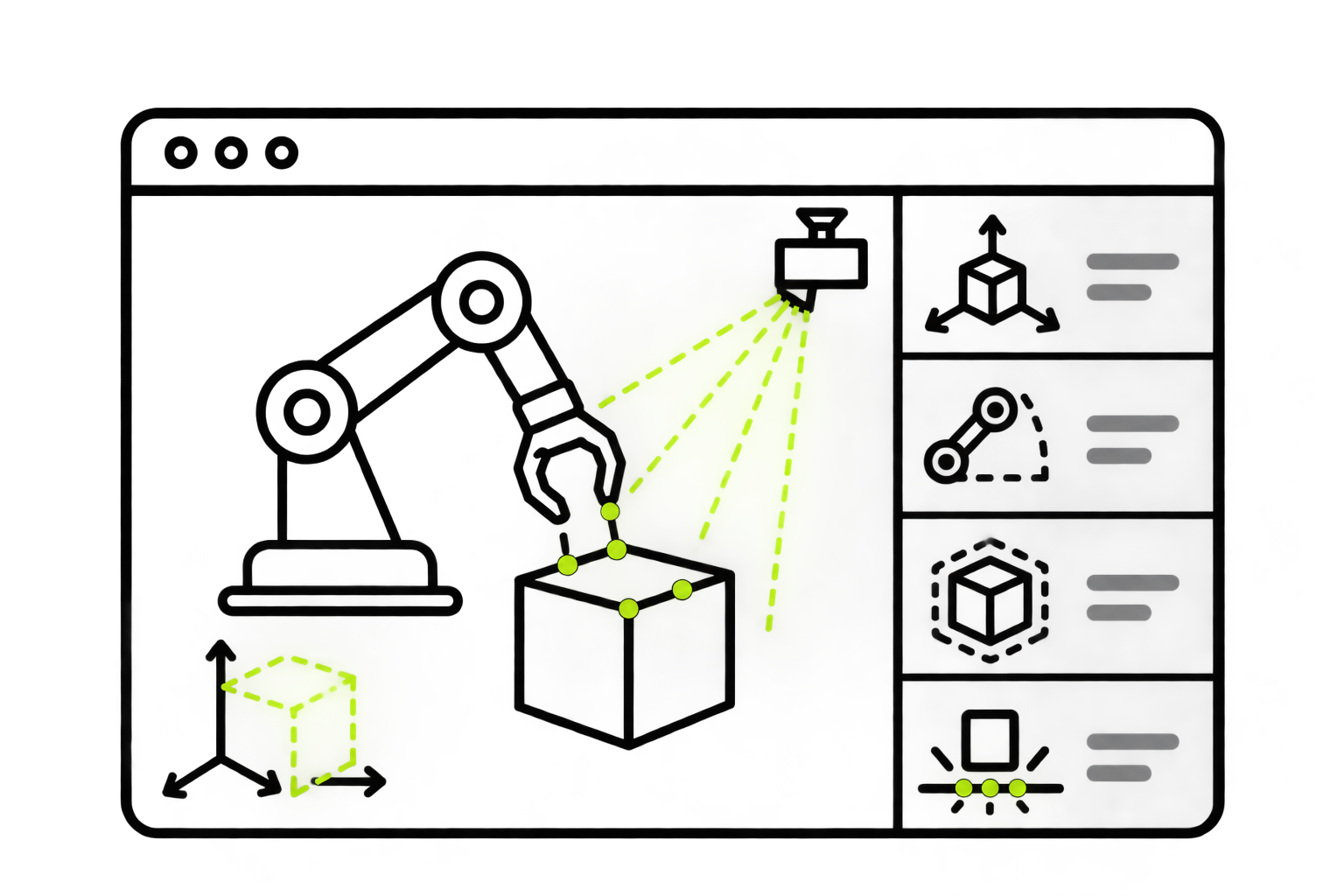
Visually inspect simulation properties of model (e.g. inertia tensors, joints limits, collision meshes).
Visually inspect simulation behaviour (e.g. contact points, lidar rays).
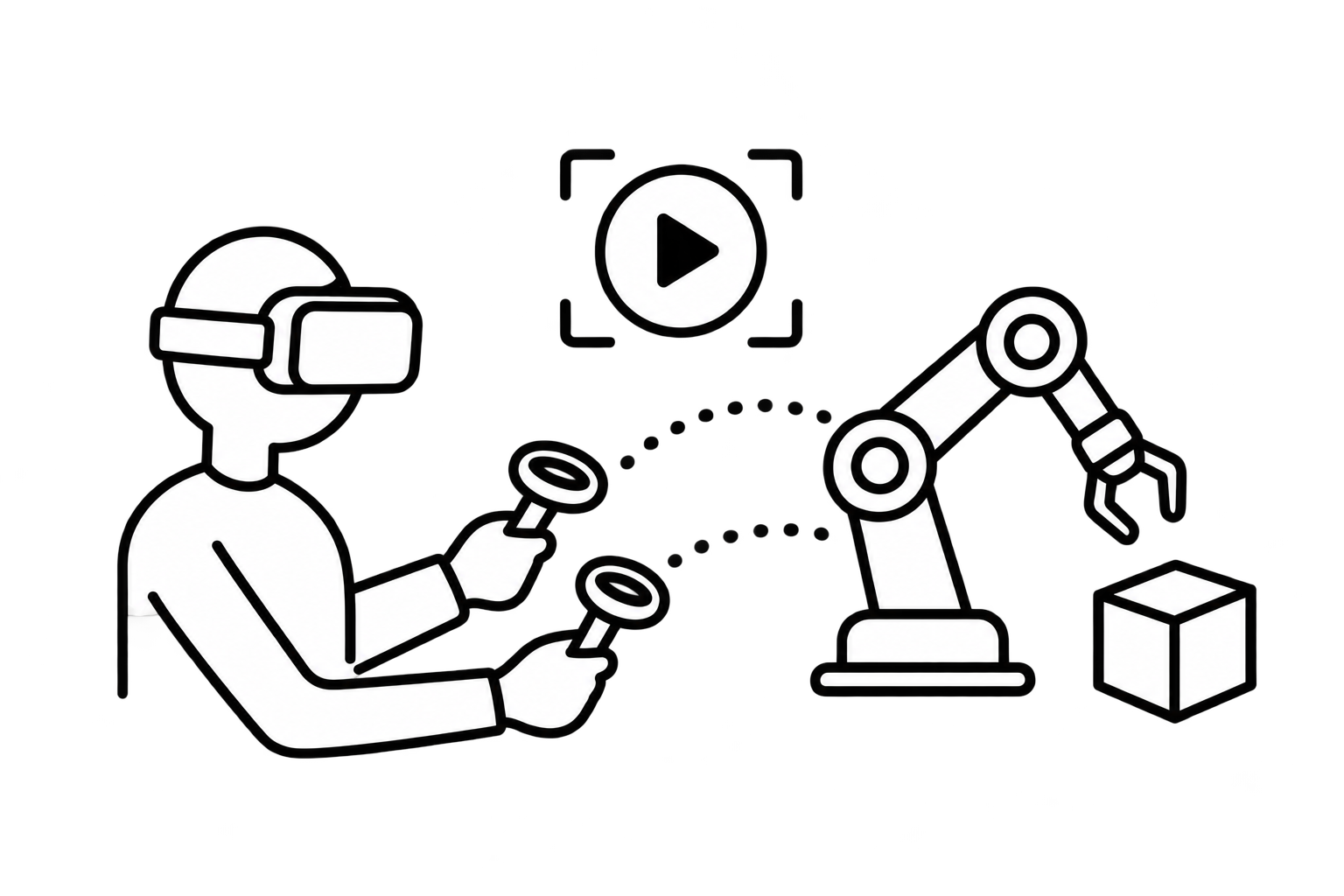
Simulated robots can be manipulated using VR glasses and controllers.
Humanoid robots can be manipulated using hand/finger tracking.
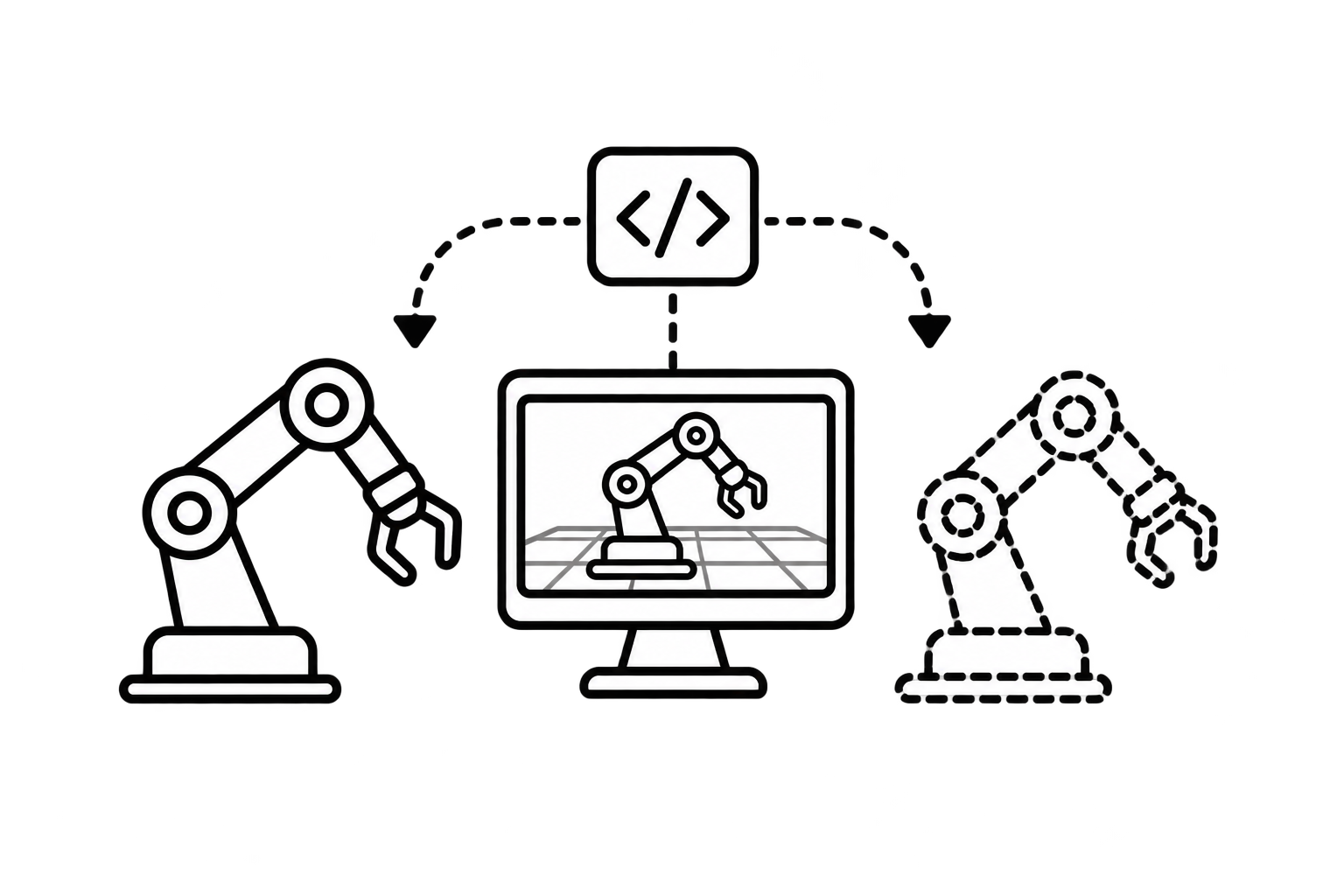
Robots in Vlab can be configured to accept the same commands as the real robot’s control script.
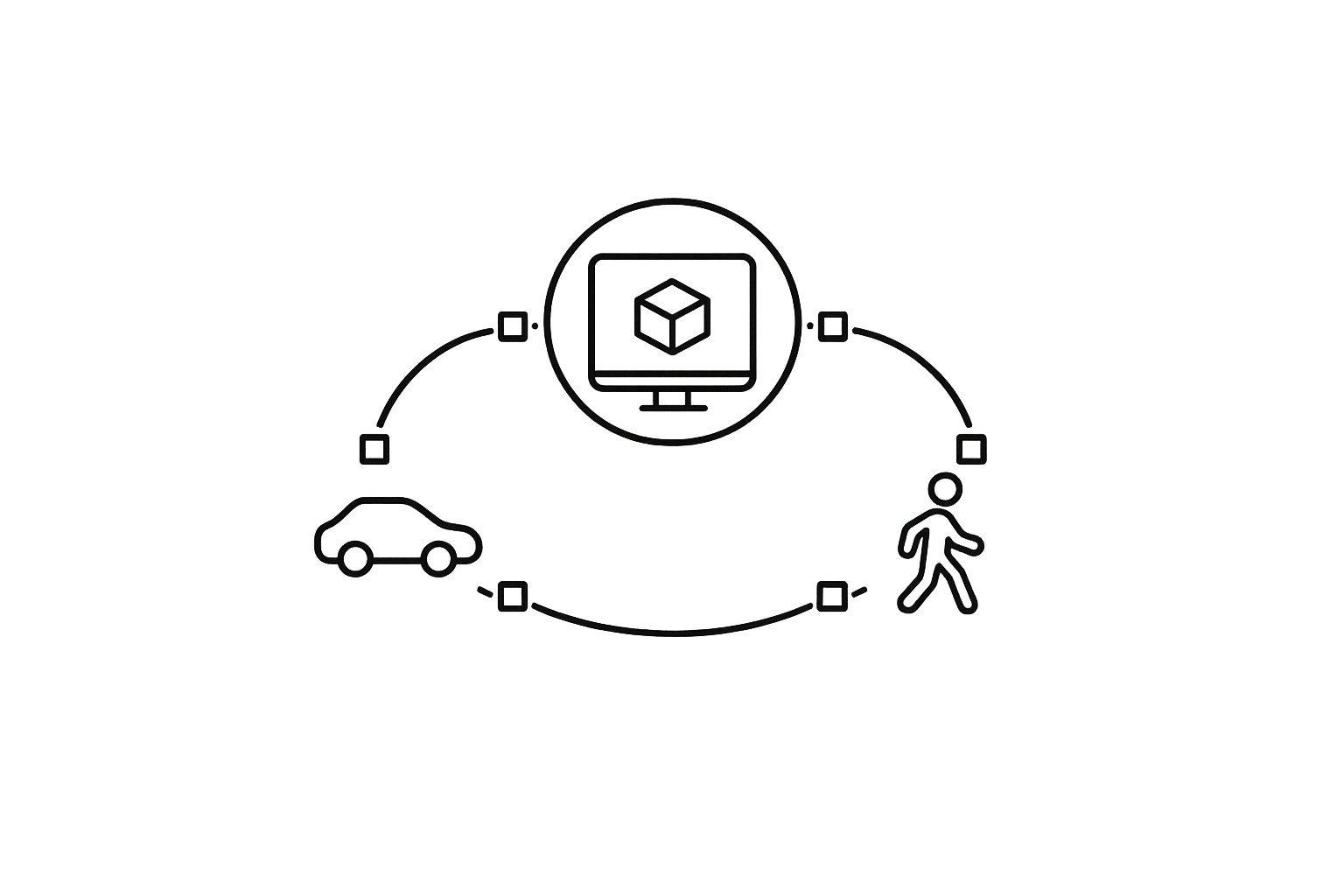
Testing policies on the digital twin can speed up iteration time and prevent expensive hardware breakage.
Calibrates joint properties (e.g. gains, friction).
Calibrate camera placement.


Continuously monitor and evaluate potential outcomes of actions in simulation faster than real-time to avoid critical failures and ensure safe operation.
Learn new behaviors on the edge to adapt to unseen situations on-demand.